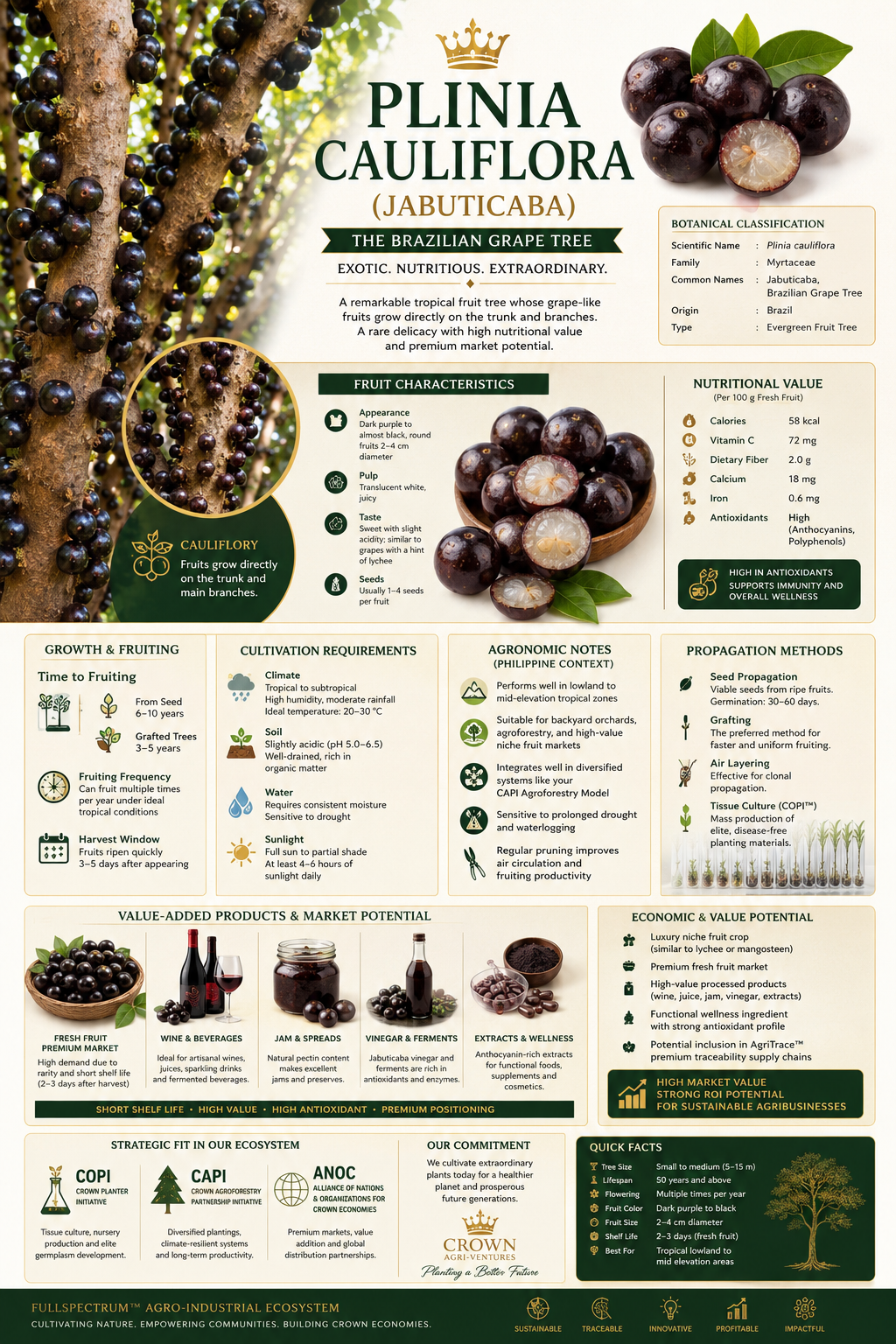
- Common names: Jabuticaba, Brazilian Grape Tree
- Family: Myrtaceae (same family as guava and eucalyptus)
- Growth habit: Small to medium-sized evergreen tree
- Unique trait: Fruits grow directly on the trunk and main branches (a phenomenon called cauliflory)
Fruit Characteristics
- Appearance: Dark purple to almost black, round fruits (2–4 cm diameter)
- Pulp: Translucent white, juicy, sweet with slight acidity
- Taste: Similar to grapes with a hint of lychee
- Seeds: Usually 1–4 per fruit
Fruiting & Growth
- Time to fruiting:
- From seed: ~6–10 years
- Grafted trees: ~3–5 years
- Fruiting frequency: Can fruit multiple times per year under ideal tropical conditions
- Harvest window: Fruits ripen quickly (3–5 days after appearing)
Cultivation Requirements
Climate:
- Tropical to subtropical
- Prefers high humidity and moderate rainfall
Soil:
- Slightly acidic, well-drained, rich in organic matter
Water:
- Requires consistent moisture (sensitive to drought)
Sunlight:
- Full sun to partial shade
Agronomic Notes
- Performs well in lowland to mid-elevation tropical zones
- Suitable for backyard orchards, agroforestry, and high-value niche fruit markets
- Can integrate into diversified systems like your CAPI agroforestry model
Economic & Value Potential
- Fresh fruit market: Premium due to rarity and short shelf life
- Processed products:
- Wine
- Jam
- Juice
- Vinegar
- Nutritional value:
- High in antioxidants (anthocyanins)
- Rich in vitamin C
Strategic Potential
Jabuticaba can be positioned as:
- Luxury niche fruit crop (similar to lychee or mangosteen)
- Functional wellness ingredient (antioxidant extracts)
- Artisan beverage base (fermented jabuticaba wine)
- Potential inclusion in AgriTrace™ premium traceability supply chains
Limitations
- Very short shelf life (2–3 days after harvest)
- Slow growth from seed
- Sensitive to prolonged drought