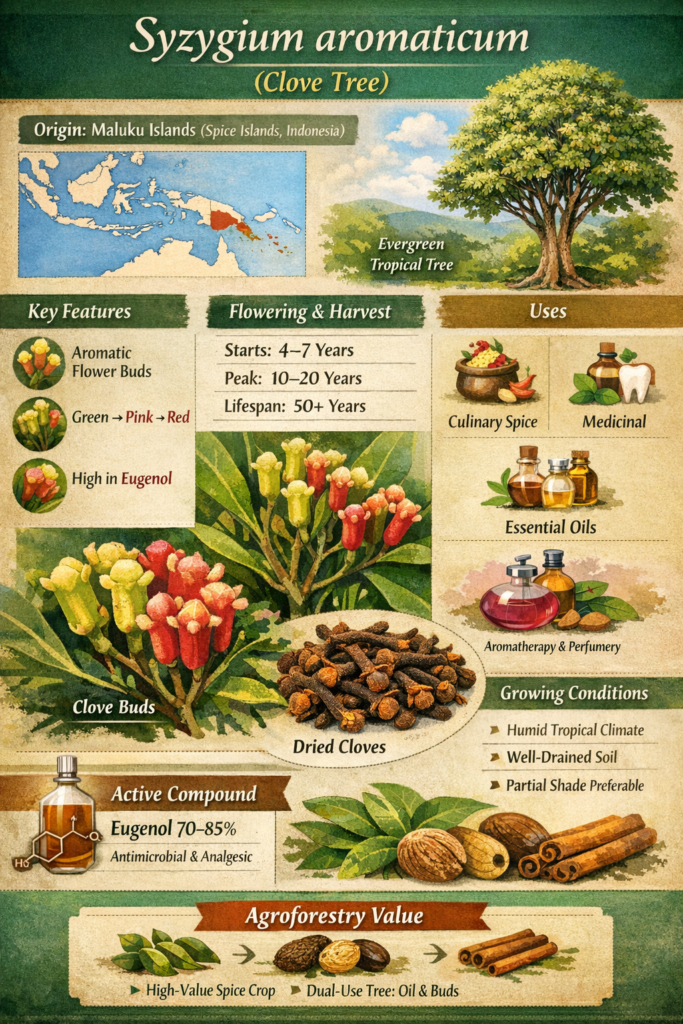
- Scientific name: Syzygium aromaticum
- Common name: Clove
- Family: Myrtaceae
- Origin: Maluku Islands (Spice Islands)
- Plant type: Evergreen tropical tree
Key Characteristics
- Produces aromatic flower buds (these are the cloves we use)
- Buds turn from green → pink → red before harvest
- Highly fragrant due to eugenol-rich essential oil
Growth & Flowering
- Starts flowering in about 4–7 years (faster under ideal tropical conditions)
- Peak production at 10–20 years
- Productive lifespan: 50+ years
Uses
1. Culinary
- Spice for meat, curries, desserts, and beverages
- Common in Filipino dishes like adobo variants and ham glazing
2. Medicinal
- Strong antibacterial and antifungal
- Used for:
- Toothache relief (clove oil)
- Digestive aid
- Respiratory support
3. Perfumery & Essential Oils
- Rich, warm, spicy note (middle-to-base note)
- Widely used in:
- Perfumes
- Soaps
- Aromatherapy blends
Active Compound
- Eugenol (70–85%)
- Responsible for antimicrobial and analgesic properties
- Valuable for your ANOC / Ethereal Scent line
Cultivation Insights (Philippines)
- Thrives in:
- Humid tropical climate
- Well-drained loamy soil
- Prefers partial shade when young
- Sensitive to drought and strong winds
Strategic Value for Your Agroforestry System
Clove fits well into your Crown Agroforestry model as:
- A high-value spice crop
- A dual-use tree (oil + dried buds)
- A complementary species alongside:
- Agarwood (Aquilaria)
- Nutmeg (Myristica fragrans)
- Cinnamon