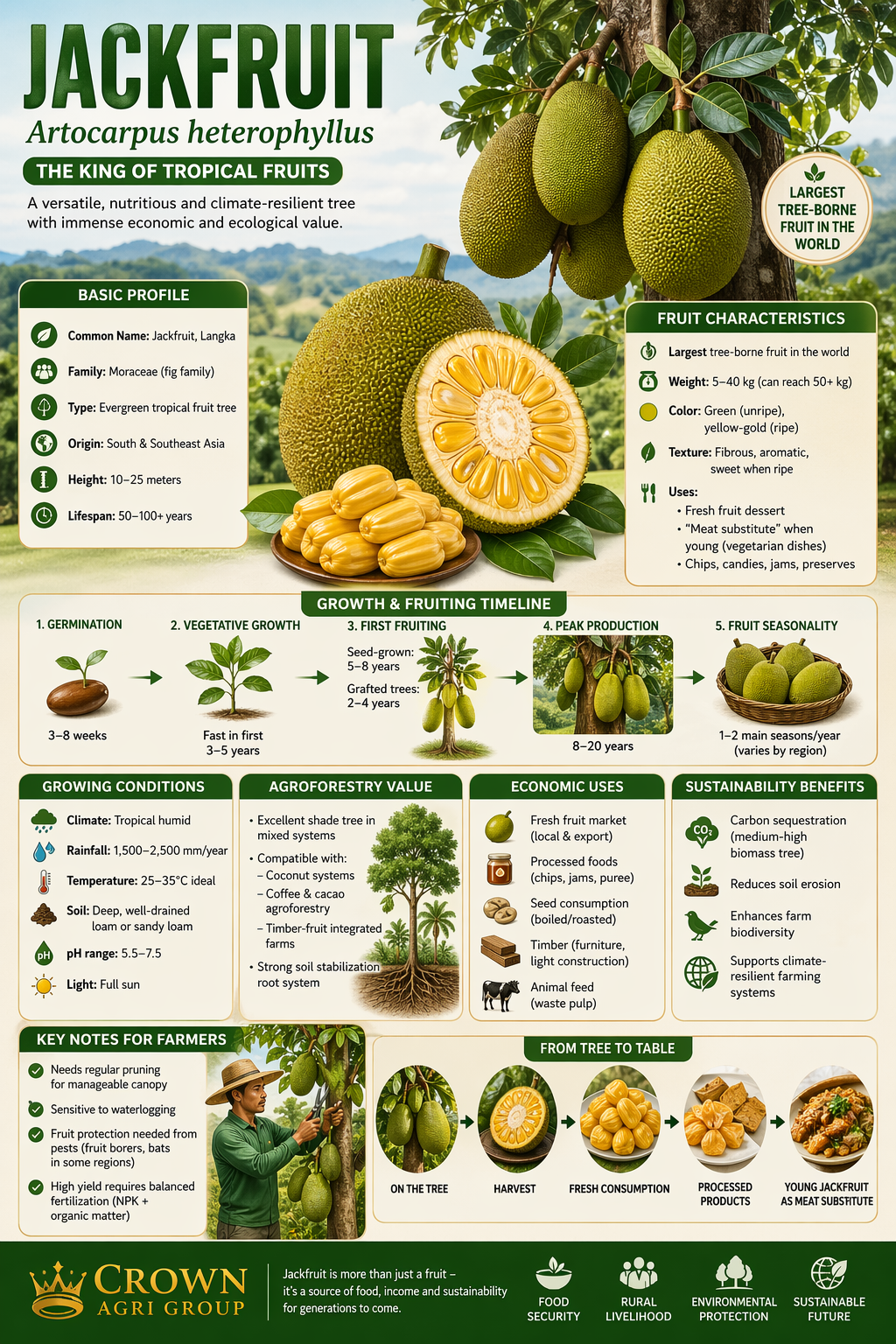
Basic Profile
- Common Name: Jackfruit, Langka (Philippines)
- Family: Moraceae (fig family)
- Type: Evergreen tropical fruit tree
- Origin: South & Southeast Asia
- Height: 10–25 meters
- Lifespan: 50–100+ years
Fruit Characteristics
- Largest tree-borne fruit in the world
- Weight: 5–40 kg (can reach 50+ kg)
- Color: Green (unripe), yellow-gold (ripe)
- Texture: Fibrous, aromatic, sweet when ripe
- Uses:
- Fresh fruit dessert
- “Meat substitute” when young (vegetarian dishes)
- Chips, candies, jams, preserves
Growth & Fruiting Timeline
- Germination: 3–8 weeks
- Vegetative growth: fast in first 3–5 years
- First fruiting:
- Seed-grown: 5–8 years
- Grafted trees: 2–4 years
- Peak production: 8–20 years
- Fruit seasonality: 1–2 main seasons/year (varies by region)
Growing Conditions
- Climate: Tropical humid
- Rainfall: 1,500–2,500 mm/year
- Temperature: 25–35°C ideal
- Soil: Deep, well-drained loam or sandy loam
- pH range: 5.5–7.5
- Light: Full sun
Agroforestry Value
- Excellent shade tree in mixed systems
- Compatible with:
- Coconut systems
- Coffee & cacao agroforestry
- Timber-fruit integrated farms
- Strong soil stabilization root system
Economic Uses
- Fresh fruit market (local & export)
- Processed foods (chips, jams, puree)
- Seed consumption (boiled/roasted)
- Timber (furniture, light construction)
- Animal feed (waste pulp)
Sustainability Benefits
- Carbon sequestration (medium-high biomass tree)
- Reduces soil erosion
- Enhances farm biodiversity
- Supports climate-resilient farming systems
Key Notes for Farmers
- Needs regular pruning for manageable canopy
- Sensitive to waterlogging
- Fruit protection needed from pests (fruit borers, bats in some regions)
- High yield requires balanced fertilization (NPK + organic matter)