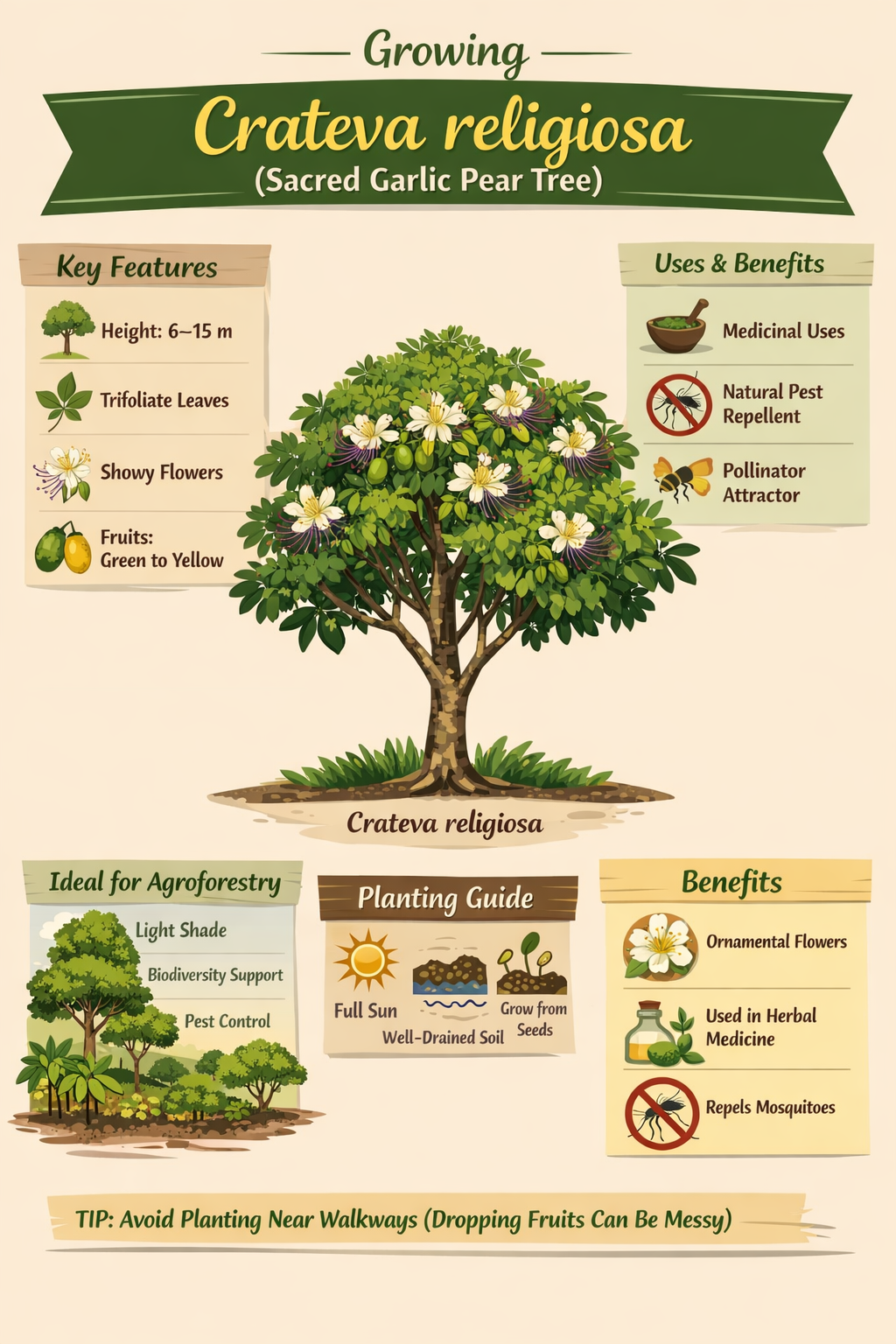
Common names: Sacred Garlic Pear, Temple Plant, Balai-lamok (Philippines)
Crateva religiosa is a fast-growing, deciduous tree widely found in tropical Asia, including the Philippines. It is valued for its ornamental flowers, medicinal properties, and ecological benefits—making it ideal for agroforestry and landscape planting.
Key Characteristics
- Height: 6–15 meters
- Crown: Open, spreading canopy
- Leaves: Trifoliate (three leaflets), aromatic when crushed
- Flowers: Showy white to creamy-yellow petals with long purple stamens
- Fruits: Round, green turning yellow when mature
Flowering & Fruiting
- Blooming age: Typically 2–4 years after planting (faster under good care)
- Flowering season: Usually dry season to early summer
- Pollination: Attracts bees, butterflies, and birds
Uses & Benefits
Ornamental Value
- Highly decorative flowers with long stamens
- Ideal for avenues, parks, and farm estates
Medicinal Uses
- Used in traditional medicine for:
- Urinary disorders
- Anti-inflammatory applications
- Bark and leaves are commonly utilized
Natural Pest Repellent
- Known locally as “balai-lamok” (mosquito house plant)
- Leaves emit compounds that help repel insects
Agroforestry Role
- Suitable for multi-layered agroforestry systems
- Provides:
- Light shade
- Biodiversity support
- Pollinator attraction
Growing Conditions
- Climate: Tropical, thrives in lowland Philippines
- Soil: Well-drained soils (tolerates poor soils)
- Sunlight: Full sun
- Water: Moderate (drought-tolerant once established)
Propagation
- Seeds: Primary method (germination in 1–3 weeks)
- Cuttings: Possible but less common
Considerations
- Deciduous—will shed leaves seasonally
- Fruits can be messy if planted near walkways
- Moderate growth rate but responds well to pruning
Strategic Value (for Your Agroforestry Projects)
For your Crown Agroforestry systems, Crateva religiosa is excellent as:
- A functional ornamental tree layer
- A natural pest-management companion species
- A pollinator-support tree to enhance productivity of nearby crops (including agarwood systems)