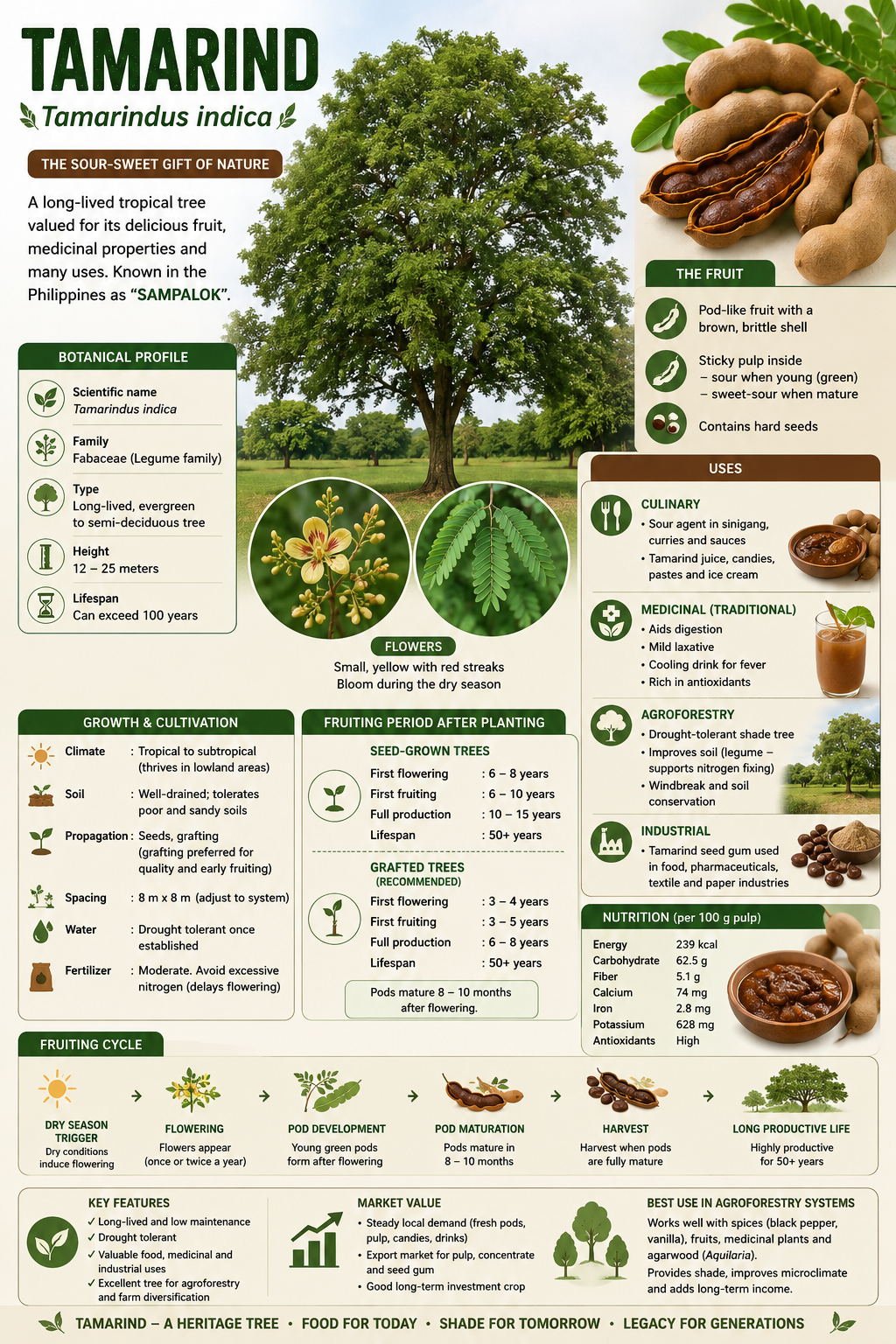
- Scientific name: Tamarindus indica
- Family: Fabaceae (legume family)
- Type: Long-lived, evergreen to semi-deciduous tree
- Height: 12–25 meters
- Lifespan: Can exceed 100 years
Fruit Characteristics
- Pod-like fruit with a brown brittle shell
- Sticky pulp inside:
- Sour when young (green)
- Sweet-sour when mature
- Contains hard seeds
Growth & Cultivation
- Climate: Tropical to subtropical (thrives in Philippine lowlands)
- Soil: Well-drained; tolerates poor soils
- Propagation: Seeds, grafting (preferred for quality fruit)
- Bearing age:
- Seed-grown: ~6–10 years
- Grafted: ~3–5 years
Flowering & Fruiting
- Flowers: Small, yellow with red streaks
- Blooming: Usually during dry season
- Harvest: 8–10 months after flowering
Uses
1. Culinary
- Sour agent in sinigang and sauces
- Tamarind juice, candies, pastes
2. Medicinal (traditional)
- Digestive aid
- Mild laxative
- Cooling drink for fever
3. Agroforestry
- Drought-tolerant shade tree
- Soil improvement (legume = nitrogen-fixing support)
4. Industrial
- Tamarind seed gum (used in food and textiles)
Value for Agroforestry (Aligned with Your Projects)
For your agroforestry estates under Crown Agri:
- Excellent buffer tree for mixed plantations
- Compatible with agarwood (Aquilaria) as a shade-regulating species
- Low maintenance + long-term yield = good for farm estate models
Quick Snapshot
| Factor | Details |
|---|---|
| Growth rate | Slow to moderate |
| Maintenance | Low |
| Market value | Moderate but stable |
| Climate resilience | High (drought-tolerant) |