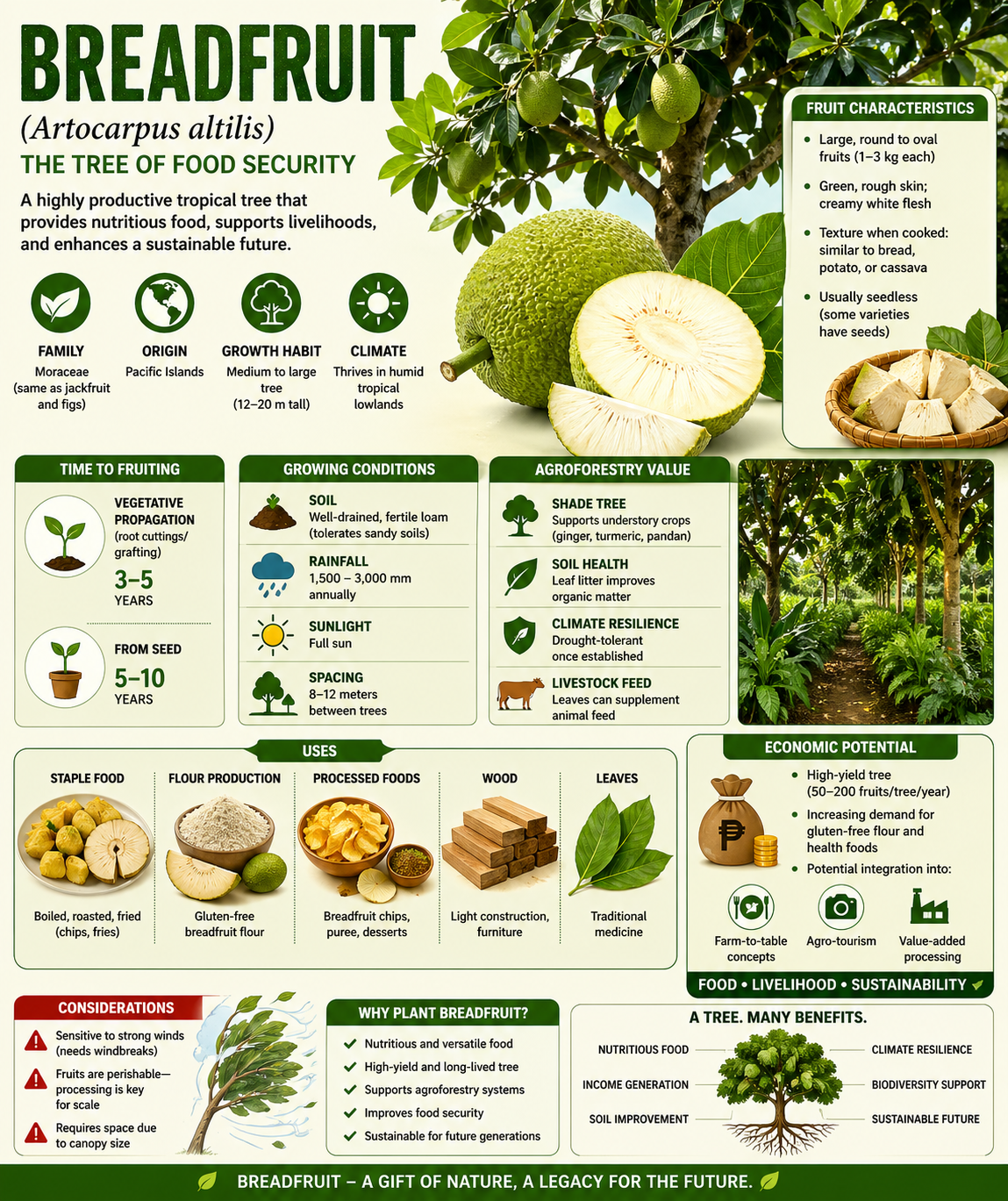
Breadfruit (Artocarpus altilis) is a highly productive tropical tree valued for its starchy fruits, food security potential, and agroforestry benefits—making it a strong candidate for integrated farm systems in the Philippines.
- Family: Moraceae (same as jackfruit and figs)
- Origin: Pacific Islands
- Growth Habit: Medium to large tree (12–20 m tall)
- Climate: Thrives in humid tropical lowlands
Fruit Characteristics
- Large, round to oval fruits (1–3 kg each)
- Green, rough skin; creamy white flesh
- Texture when cooked: similar to bread, potato, or cassava
- Usually seedless (some varieties have seeds)
Time to Fruiting
- Vegetative propagation (root cuttings/grafting): 3–5 years
- From seed: 5–10 years
Growing Conditions
- Soil: Well-drained, fertile loam (tolerates sandy soils)
- Rainfall: 1,500–3,000 mm annually
- Sunlight: Full sun
- Spacing: 8–12 meters between trees
Agroforestry Value
Breadfruit fits well into diversified systems like your Crown Agroforestry model:
- Shade Tree: Supports understory crops (ginger, turmeric, pandan)
- Soil Health: Leaf litter improves organic matter
- Climate Resilience: Drought-tolerant once established
- Livestock Feed: Leaves can supplement animal feed
Uses
- Staple food: Boiled, roasted, fried (chips, fries)
- Flour production: Gluten-free breadfruit flour
- Processed foods: Breadfruit chips, puree, desserts
- Wood: Light construction, furniture
- Leaves: Traditional medicine
Economic Potential
- High-yield tree (50–200 fruits/tree/year)
- Increasing demand for gluten-free flour and health foods
- Potential integration into:
- Farm-to-table concepts
- Agro-tourism
- Value-added processing (aligned with your CAHTI or ANOC ventures)
Considerations
- Sensitive to strong winds (needs windbreaks)
- Fruits are perishable—processing is key for scale
- Requires space due to canopy size