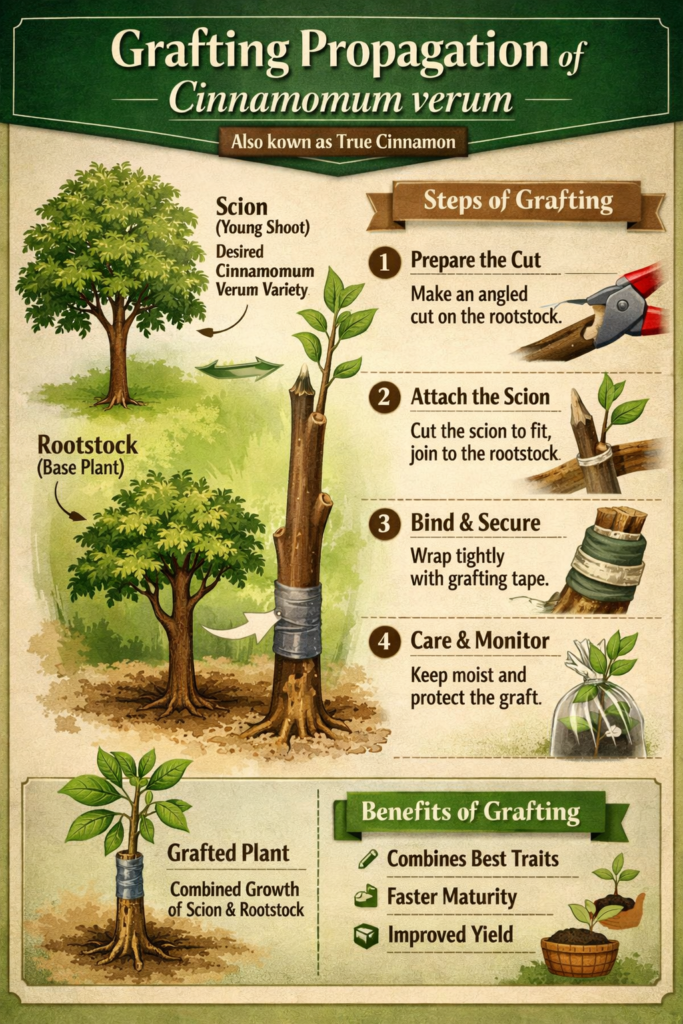
Grafting is the preferred propagation method for producing uniform, high-quality cinnamon trees—especially for commercial plantations and agroforestry systems.
Why Use Grafting?
- Ensures true-to-type (consistent flavor & oil quality)
- Earlier maturity (1–2 years faster than seed-grown)
- Better bark yield and uniformity
- Allows selection of elite mother trees
Types of Grafting Used
- Cleft Grafting (most common)
- Side Veneer Grafting
- Approach Grafting (less common, more labor-intensive)
Cleft grafting is the most practical for field nurseries.
Step-by-Step: Cleft Grafting
1. Rootstock Preparation
- Use 6–12 month-old seedlings
- Stem diameter: 0.5–1.0 cm
- Healthy, disease-free, actively growing
2. Scion Selection
- From elite mother tree
- Semi-hardwood (not too young or too woody)
- 8–12 cm length with 2–3 buds
- Leaves trimmed (reduce transpiration)
3. Making the Graft
- Cut the rootstock vertically (2–3 cm split)
- Shape the scion into a wedge
- Insert scion firmly into the split
4. Securing the Union
- Wrap tightly using:
- Grafting tape / polyethylene strip
- Cover with plastic bag to maintain humidity
5. Aftercare
- Place under partial shade (50–70%)
- Maintain high humidity
- Avoid waterlogging
Healing Timeline
- 2–3 weeks: Callus formation
- 3–5 weeks: Bud break (successful graft)
- 6–8 weeks: Remove wrapping gradually
Success Factors
- 🌡️ Temperature: 25–30°C
- 💧 High humidity (critical)
- ✂️ Clean, sharp tools (avoid infection)
- ⏰ Perform during active growth season (rainy months in PH)
Common Mistakes to Avoid
- ❌ Using immature or overly woody scions
- ❌ Poor cambium alignment
- ❌ Loose wrapping → air gaps
- ❌ Direct sunlight exposure after grafting
Nursery Setup Recommendation
For your agroforestry ventures:
- Mist chamber or simple humidity tent
- Shaded propagation area (net house)
- Labeling system for mother tree tracking
Integration Insight (For Your Projects)
You can establish a clonal cinnamon block alongside:
- Aquilaria malaccensis
- Other perfumery crops under your COPI / CAPI programs
This ensures:
- Standardized raw material for essential oil extraction (CESI)
- Premium-grade bark for export markets