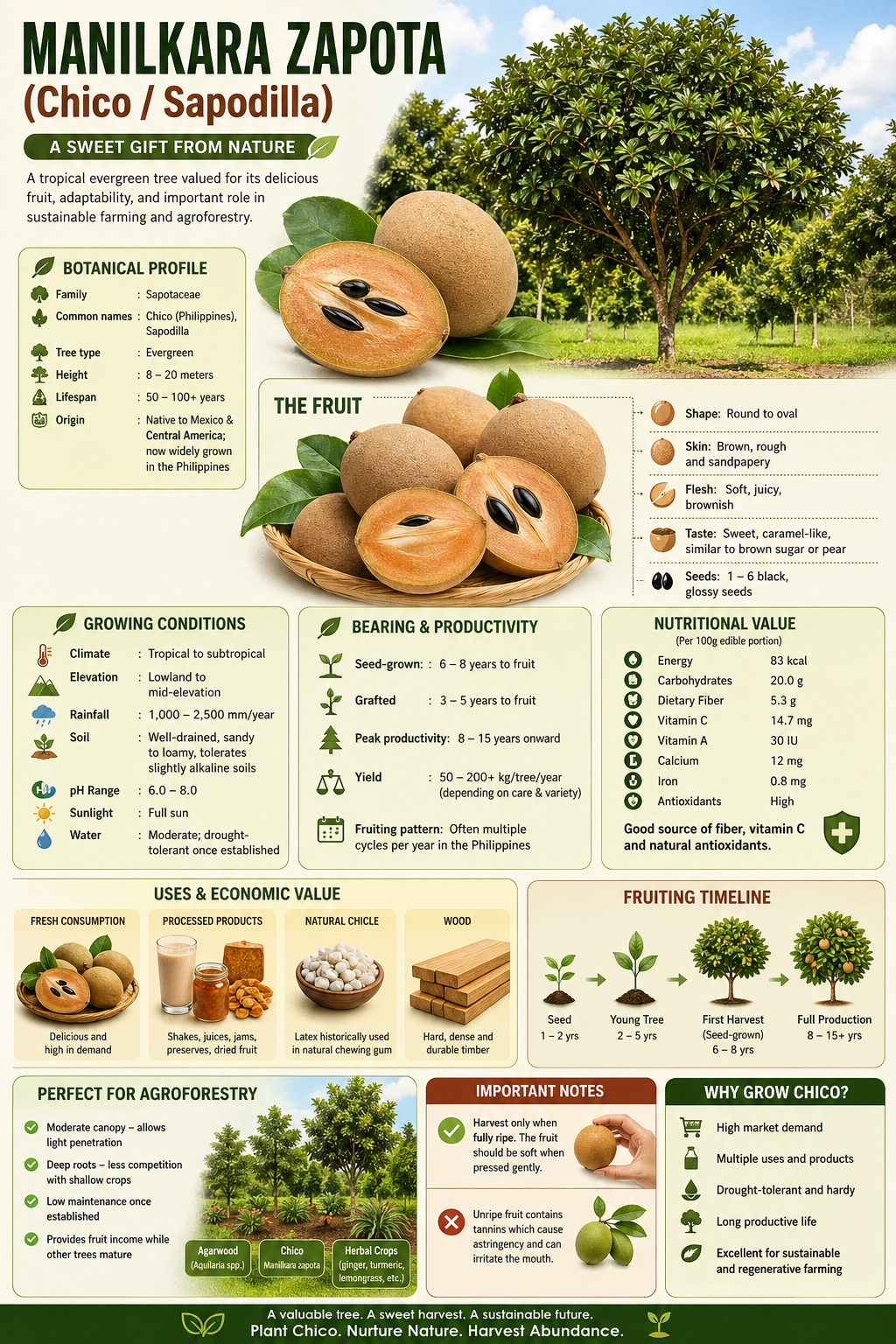
A highly adaptable, fruit-bearing tree widely cultivated across the Philippines, valued for its sweet fruit and resilience in tropical agroforestry systems.
- Family: Sapotaceae
- Common names: Chico (Philippines), Sapodilla
- Tree type: Evergreen
- Height: 8–20 meters
- Lifespan: Can exceed 50–100 years
Fruit Description
- Skin: Brown, rough-textured
- Flesh: Soft, juicy, caramel-sweet
- Flavor profile: Brown sugar, pear, slight malt
- Seeds: Black, shiny, hook-tipped
Growth Requirements
- Climate: Tropical to subtropical
- Elevation: Lowland to mid-elevation
- Rainfall: 1,000–2,500 mm/year
- Soil: Well-drained (tolerates sandy, loamy, even slightly alkaline soils)
- pH range: 6.0–8.0
- Sunlight: Full sun
Notably drought-tolerant once mature—ideal for climate-resilient farming systems.
Bearing & Productivity
- Seed-grown: 6–8 years before fruiting
- Grafted: 3–5 years
- Peak productivity: 8–15 years onward
- Yield: 50–200+ kg/tree/year depending on care and variety
- Fruiting pattern: Often multiple cycles per year in the Philippines
Agroforestry & Farm Integration
For your Crown Agroforestry / Agarwood systems, chico offers strategic value:
Advantages:
- Moderate canopy → allows light penetration
- Deep root system → minimal competition with shallow crops
- Low input requirement once established
- Can serve as a buffer or boundary tree
Best pairings:
- Agarwood (Aquilaria spp.)
- Ginger, turmeric, lemongrass (understory crops)
- Nitrogen-fixing trees (e.g., Gliricidia, Erythrina)
Economic Uses
- Fresh fruit market (high local demand)
- Processed products:
- Smoothies / shakes
- Dried chico
- Jams & preserves
- Latex (Chicle): Historically used for natural chewing gum
- Wood: Dense, durable (minor timber use)
Nutritional & Functional Value
- High in natural sugars → quick energy source
- Rich in fiber → digestive health
- Contains vitamin C, polyphenols, antioxidants
Cultivation Notes
- Harvest only when fully ripe (slightly soft)
- Unripe fruit contains tannins → causes astringency
- Minimal pruning required, but canopy shaping improves yield
Strategic Insight
You can position chico within your ecosystem as:
- Secondary income crop (while agarwood matures)
- Raw material for your future Crown Apothecary / herbal products
- Ingredient for wellness beverages or natural sweeteners
- Component in eco-estate landscaping (CREDI projects)