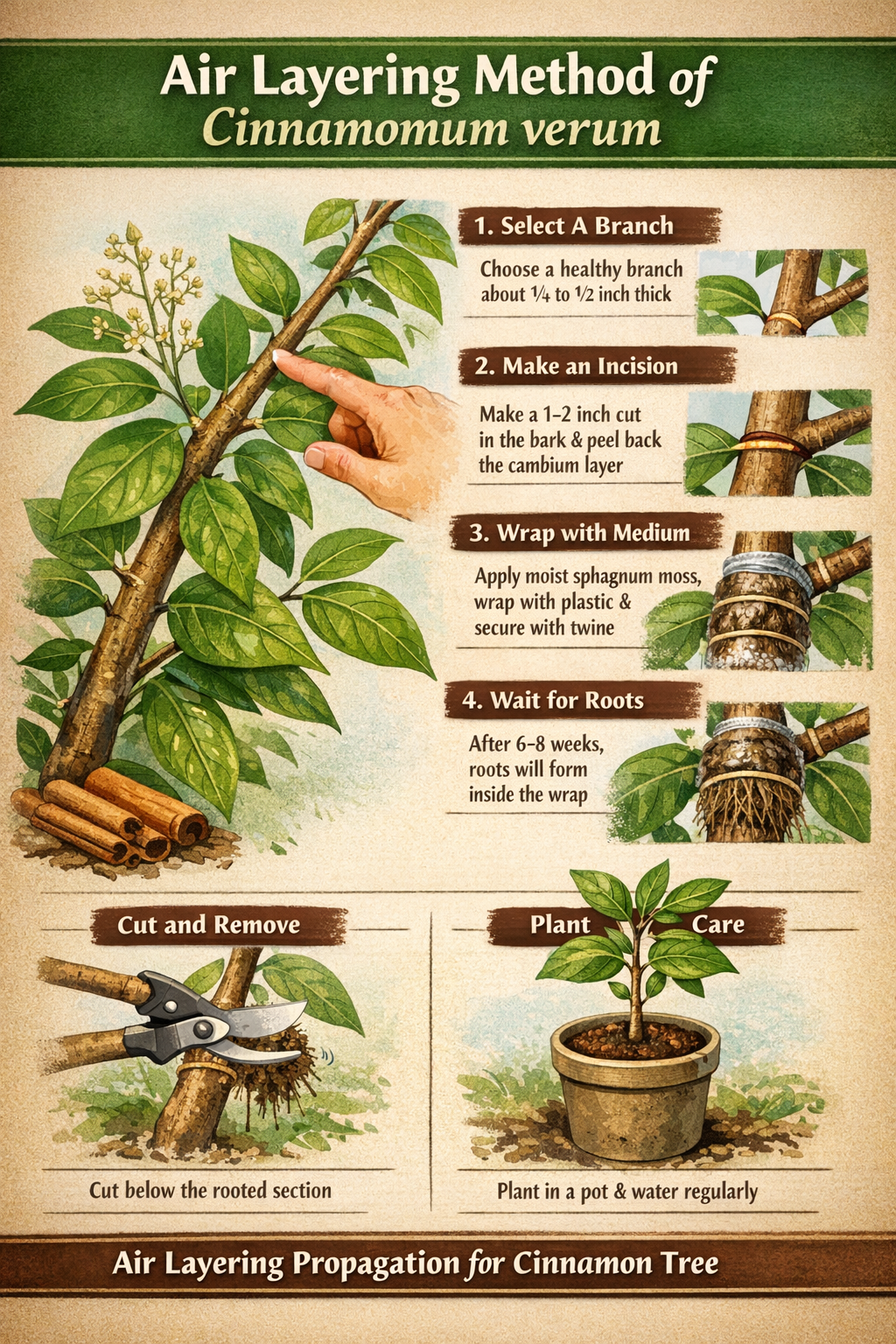
Air layering is a vegetative propagation method that allows you to produce true-to-type cinnamon plants without the need for grafting. It’s especially useful for multiplying elite trees with desirable bark quality and oil profile.
Why Use Air Layering?
- Produces genetically identical clones
- No need for rootstock
- Higher success rate than cuttings
- Simple and farmer-friendly
Best Time to Perform
- Early rainy season (ideal in the Philippines: May–August)
- When the tree is in active growth
Step-by-Step Procedure
1. Branch Selection
- Choose a healthy, semi-hardwood branch
- Diameter: 1–2 cm
- Age: ~1 year old
- Must be disease-free and vigorous
2. Girdling (Wounding)
- Remove a 2–3 cm ring of bark
- Scrape off the cambium layer to prevent healing
3. Apply Rooting Medium
- Use moist materials like:
- Sphagnum moss
- Coco coir
- Compost + soil mix
- Optional: apply rooting hormone (IBA) to speed up rooting
4. Wrapping
- Cover with plastic (polyethylene)
- Tie both ends securely
- Ensure the medium stays moist but not soaked
5. Root Development
- 3–6 weeks: Root initiation
- 6–10 weeks: Strong root formation
6. Cutting & Potting
- Cut below the rooted section
- Transfer to nursery bags with well-drained soil
- Keep under shade for 2–3 weeks (hardening phase)
Aftercare
- Maintain high humidity
- Avoid direct sunlight initially
- Gradually expose to full sun
- Light watering (avoid waterlogging)
Success Factors
- High humidity environment
- Warm temperature (25–30°C)
- Consistent moisture in rooting medium
- Healthy mother tree
Limitations
- Produces shallower root systems vs seedlings
- Not ideal for large-scale plantation (labor-intensive)
- Plants may be less wind-resistant early on
Best Use Case (Strategic Insight)
For your agroforestry and essential oil ventures:
Air layering is ideal for:
- Rapid multiplication of elite cinnamon mother trees
- Establishing clonal gardens for uniform bark quality
- Supporting raw material consistency for:
- Essential oils
- Premium spice export
Combine with:
- Grafting (for scale)
- Seed propagation (for rootstock diversity)
Integration Opportunity
You can develop a high-value aromatic block alongside:
- Aquilaria malaccensis
- Other perfumery crops under your CAPI / CESI ecosystem
This supports:
- Standardized feedstock for extraction
- Premium-grade agroforestry branding (TerraForestry™)