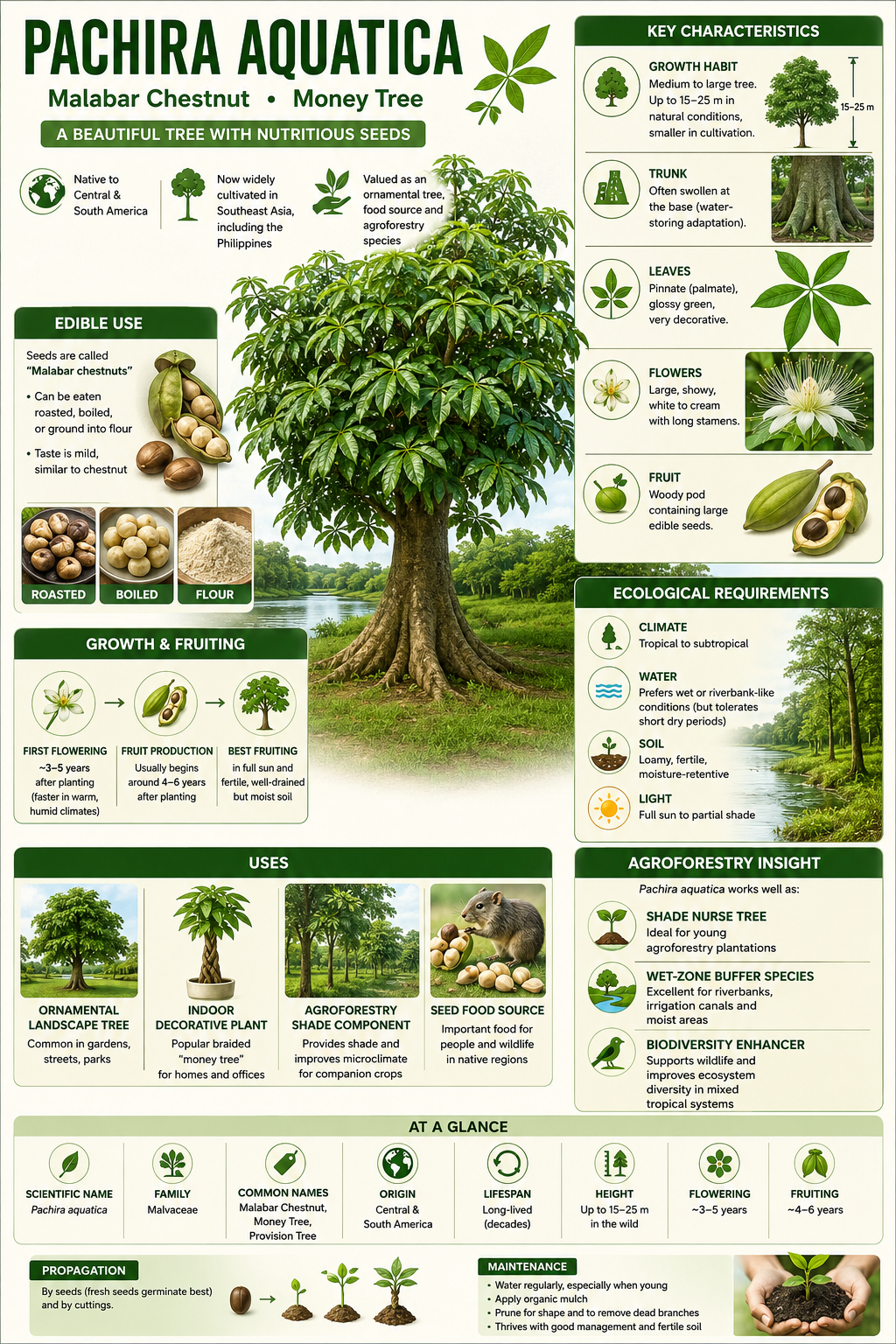
It is native to Central and South America but is now widely cultivated in Southeast Asia, including the Philippines, both as a landscape tree and an indoor ornamental.
Key Characteristics
- Growth habit: Medium to large tree (up to 15–25 m in natural conditions, smaller in cultivation)
- Trunk: Often swollen at the base (water-storing adaptation)
- Leaves: Palmate, glossy green, very decorative
- Flowers: Large, showy, white to cream with long stamens
- Fruit: Woody pod containing large edible seeds
Edible Use
- Seeds are called “Malabar chestnuts”
- Can be eaten roasted, boiled, or ground into flour
- Taste is mild, similar to chestnut
Growth & Fruiting Period
- First flowering: ~3–5 years after planting (faster in warm, humid climates)
- Fruit production: Usually begins around 4–6 years
- Best fruiting occurs in full sun and fertile, well-drained but moist soil
Ecological Requirements
- Climate: Tropical to subtropical
- Water: Prefers wet or riverbank-like conditions (but tolerates short dry periods)
- Soil: Loamy, fertile, moisture-retentive
- Light: Full sun to partial shade
Uses
- Ornamental landscape tree (very common in gardens and resorts)
- Indoor decorative plant (braided “money tree” form)
- Agroforestry shade component
- Seed food source in native regions
Agroforestry Insight
Pachira aquatica works well as:
- Shade nurse tree in young agroforestry plantations
- Wet-zone buffer species (riverbanks, irrigation canals)
- Biodiversity enhancer in mixed tropical estates