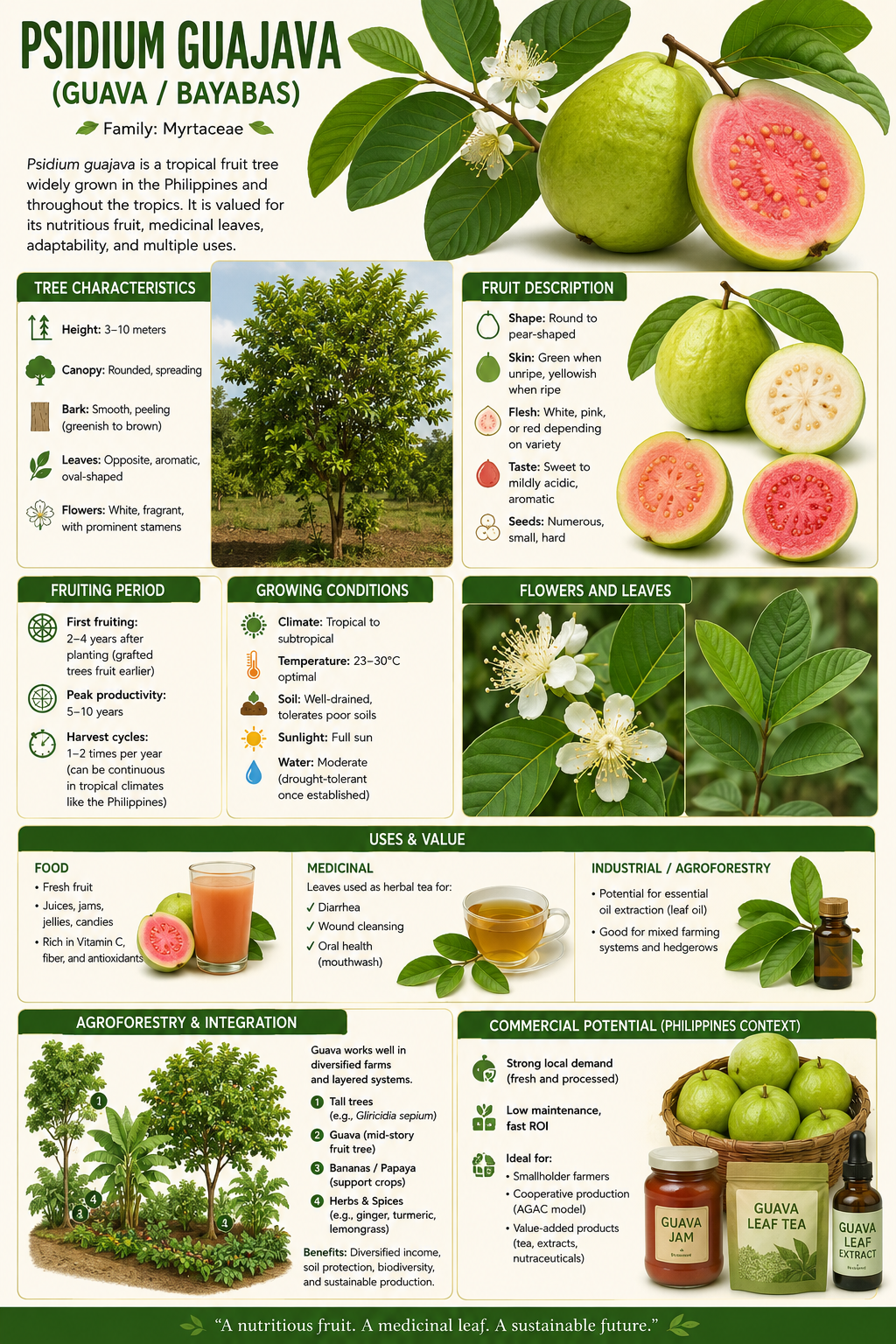
Common names: Guava, Bayabas (Philippines)
Family: Myrtaceae
Psidium guajava is a small tropical fruit tree widely grown across Southeast Asia, especially in the Philippines. It’s valued for its nutritious fruit, medicinal leaves, and adaptability to various soil types.
Tree Characteristics
- Height: 3–10 meters
- Canopy: Rounded, spreading
- Bark: Smooth, peeling (greenish to brown)
- Leaves: Opposite, aromatic, oval-shaped
- Flowers: White, fragrant, with prominent stamens
Fruit Description
- Shape: Round to pear-shaped
- Skin: Green → yellow when ripe
- Flesh: White, pink, or red depending on variety
- Taste: Sweet to mildly acidic, aromatic
- Seeds: Numerous, small, hard
Fruiting Period
- First fruiting: 2–4 years after planting (grafted trees fruit earlier)
- Peak productivity: 5–10 years
- Harvest cycles: 1–2 times per year (can be continuous in tropical climates like the Philippines)
Growing Conditions
- Climate: Tropical to subtropical
- Temperature: 23–30°C optimal
- Soil: Well-drained, tolerates poor soils
- Sunlight: Full sun
- Water: Moderate (drought-tolerant once established)
Uses & Value
Food
- Fresh fruit, juices, jams, candies
- Rich in Vitamin C, fiber, and antioxidants
Medicinal
- Leaves used as herbal tea for:
- Diarrhea
- Wound cleansing
- Oral health (mouthwash)
Industrial / Agroforestry
- Potential for essential oil extraction (leaf oil)
- Good for mixed farming systems and hedgerows
Agroforestry & Integration
Guava works well in diversified farms like your Crown Agroforestry systems:
- Intercrop with nitrogen-fixing trees (e.g., Gliricidia sepium)
- Combine with herbs like ginger, turmeric, or lemongrass
- Acts as a mid-story fruit tree in layered farming
Commercial Potential (Philippines Context)
- Strong local demand (fresh and processed)
- Low maintenance, fast ROI
- Ideal for:
- Smallholder farmers
- Cooperative production (AGAC model)
- Value-added products (tea, extracts, nutraceuticals)