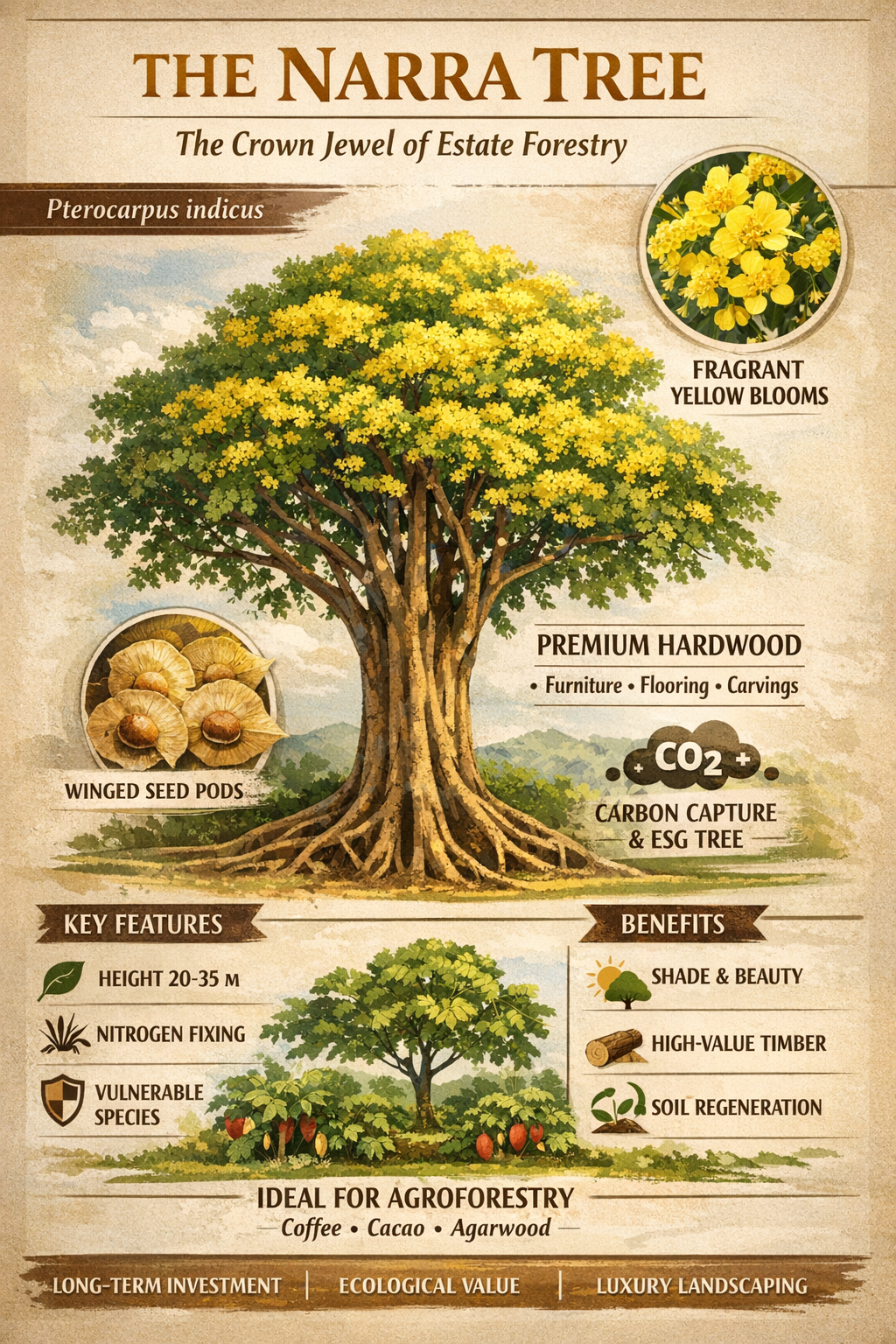
Common names: Narra
Family: Fabaceae (Legume family)
Native range: Southeast Asia, including the Philippines
Botanical Description
- Type: Large deciduous tree
- Height: 20–35 meters
- Trunk: Straight, often fluted with buttresses in mature trees
- Leaves: Pinnate, composed of 5–11 leaflets
- Flowers: Small, bright yellow, fragrant, in clusters
- Fruit: Disc-shaped pods with a wing-like margin
Ecological & Agroforestry Value
- Nitrogen-fixing: As a legume, it enhances soil fertility
- Shade provider: Ideal for mixed agroforestry systems
- Erosion control: Strong root system stabilizes soil
- Biodiversity support: Attracts pollinators and wildlife
Excellent candidate for your high-value agroforestry estates and multi-layer plantation systems.
Economic & Commercial Uses
- Premium timber:
- One of the most valuable hardwoods in Asia
- Used for luxury furniture, flooring, carvings, and musical instruments
- Resin (kino):
- Used in traditional medicine and natural dyes
- Ornamental value:
- Widely planted in avenues, parks, and estates
Landscaping & Aesthetic Value
- Golden-yellow flowers create a seasonal visual impact
- Broad canopy provides cooling shade
- Ideal for:
- Estate roads
- Eco-resorts
- High-end farm developments (like your CREDI projects)
Cultivation & Propagation
- Climate: Tropical, thrives in lowland areas
- Soil: Well-drained; tolerates a range from sandy to loamy soils
- Propagation:
- Seeds (most common)
- Wildlings or cuttings (less common)
- Growth rate: Moderate to fast in early years
Important Notes
- Conservation status: Vulnerable due to overharvesting
- Legal protection: Regulated in the Philippines (cutting requires permits)
- Pests/diseases: Susceptible to wilt and borers if unmanaged