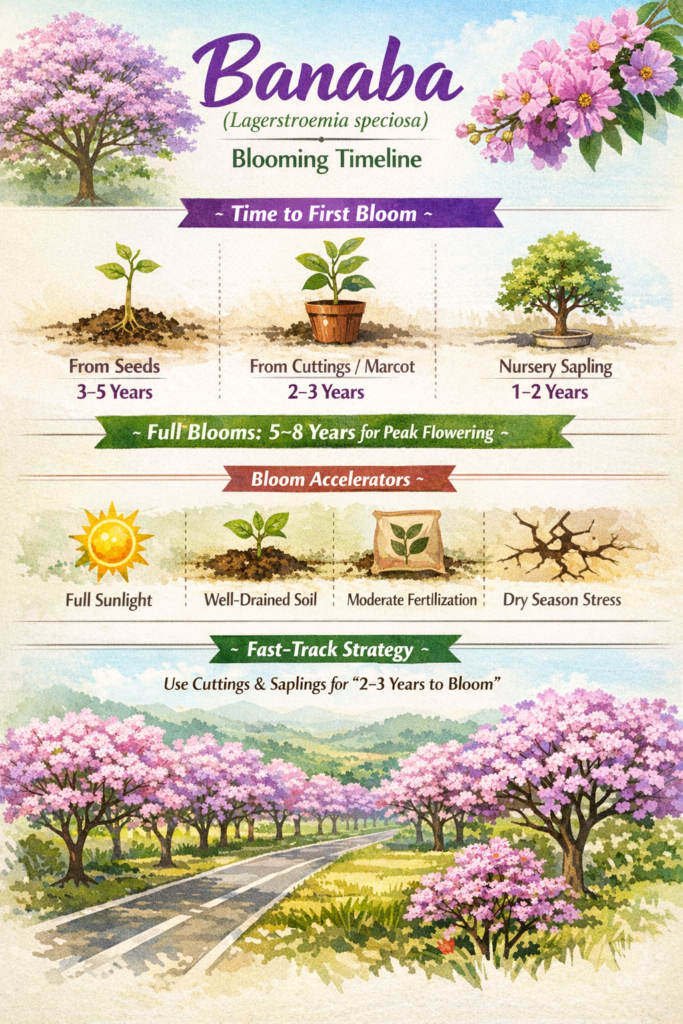
A highly valued tropical tree in the Philippines, Banaba is both an ornamental flowering species and a medicinal powerhouse—making it ideal for agroforestry, landscaping, and wellness-based enterprises.
- Common Names: Banaba, Pride of India, Queen’s Crape Myrtle
- Family: Lythraceae
- Native Range: Southeast Asia (including the Philippines)
- Growth Habit: Medium to large deciduous tree (8–20 meters tall)
Ornamental & Landscaping Value
Banaba is one of the most visually striking flowering trees:
- Flowers: Large clusters of crinkled, crepe-like blossoms
- Colors: Pink, lavender, purple
- Blooming Season: Typically summer (March–May in PH)
- Crown Shape: Broad, spreading canopy ideal for shade
- Use Cases:
- Avenue and roadside planting
- Parks, estates, eco-resorts
- Agroforestry aesthetic layer (paired with agarwood systems)
Fits perfectly into your Flowering Tree Layer for high-value agroforestry estates like TerraForestry™.
Propagation Methods
- Seeds: Most common, but variable traits
- Cuttings: Semi-hardwood cuttings for uniformity
- Air Layering (Marcotting): Faster establishment, true-to-type
- Tissue Culture: For large-scale commercial propagation (aligned with COPI initiatives)
Medicinal & Functional Uses
Banaba is widely used in traditional and modern herbal medicine:
- Leaves: Brewed into tea
- Helps regulate blood sugar (anti-diabetic properties)
- Contains corosolic acid
- Bark & Roots: Used in folk medicine
- Commercial Potential:
- Herbal teas
- Nutraceutical extracts
- Functional wellness products
Agroforestry & Environmental Benefits
- Carbon Sequestration: Moderate to high biomass producer
- Soil Improvement: Leaf litter enriches soil organic matter
- Biodiversity Support: Attracts pollinators (bees, butterflies)
- Climate Resilience: Tolerant to tropical heat and seasonal drought