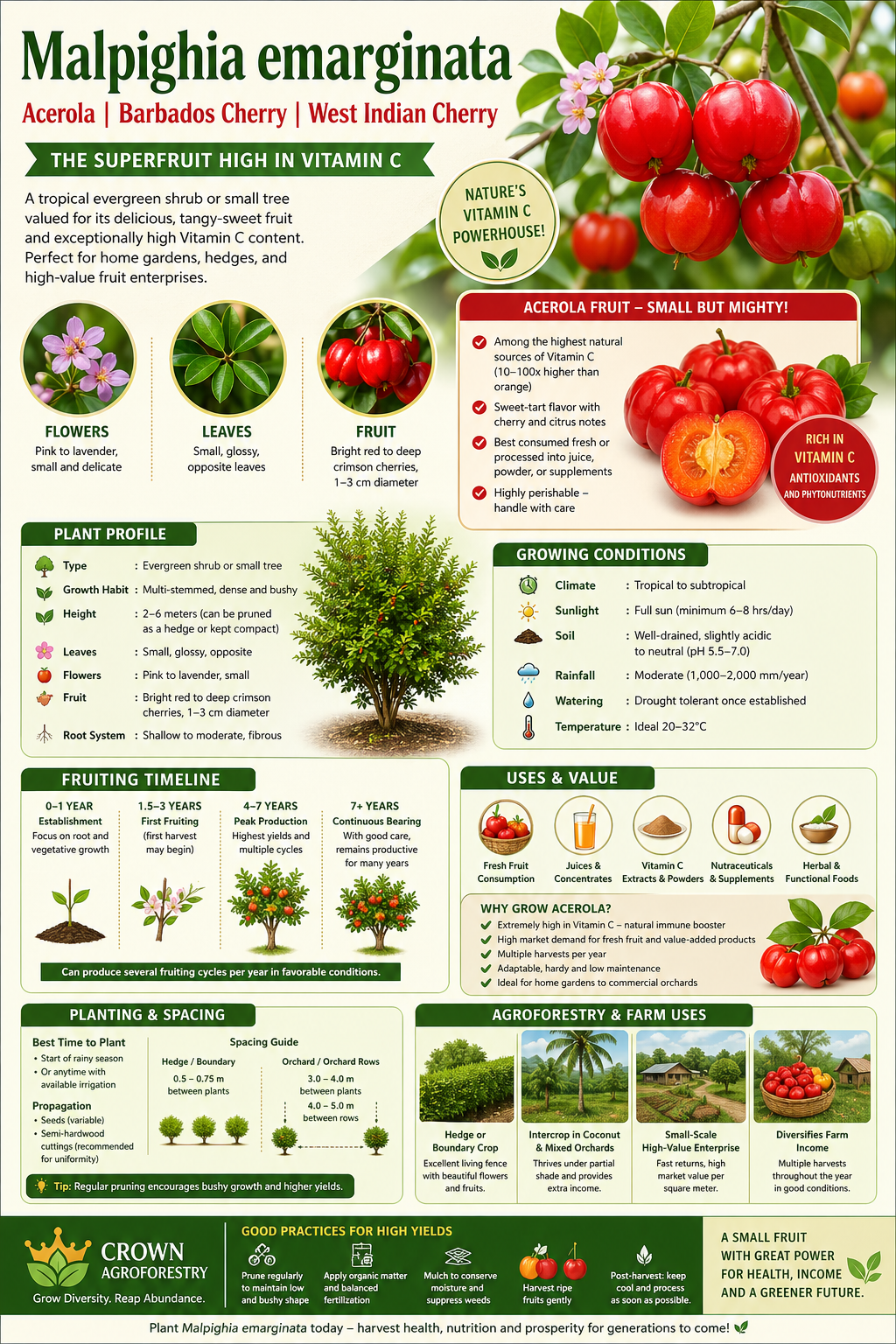
It is widely valued not just as a fruit crop but also as a high-vitamin C superfruit plant.
Key Description
Malpighia emarginata is a multi-stemmed evergreen shrub that typically grows:
- Height: 2–6 meters (can be pruned as a hedge or kept compact)
- Leaves: Small, glossy, opposite leaves
- Flowers: Pink to lavender, small and delicate
- Fruit: Bright red to deep crimson cherries, 1–3 cm diameter
Fruit Characteristics (Acerola)
- Extremely high in Vitamin C (among the highest in fruits globally)
- Taste: sweet-tart, similar to cherry with citrus notes
- Highly perishable, usually eaten fresh or processed into juice, powder, or supplements
Growing Conditions
- Climate: Tropical to subtropical
- Sunlight: Full sun preferred
- Soil: Well-drained, slightly acidic to neutral
- Rainfall: Moderate; drought tolerant once established
Fruiting Timeline
- First fruiting: ~1.5 to 3 years after planting (depending on propagation method)
- Peak production: 4–7 years
- Fruit cycles: Multiple fruiting cycles per year in favorable climates
Uses & Value
- Fresh fruit consumption
- Nutraceutical vitamin C extracts
- Juice concentrates and powders
- Herbal and functional foods
- Backyard and commercial orchard crop
Agroforestry Potential
In Philippine systems, acerola is often used as:
- Hedge or boundary crop
- Intercrop under coconut or mixed orchards
- Small-scale high-value fruit enterprise